
A System Built for Another Era
The U.S. employer health-insurance market — especially for SMBs — has been stuck in a loop. Rising costs, fragmented vendor stacks, slow quoting cycles, and paper-heavy workflows have made benefits one of the most frustrating parts of running a small or mid-sized company. As premiums rise and talent expectations shift, employers increasingly find themselves choosing between affordability and adequacy.
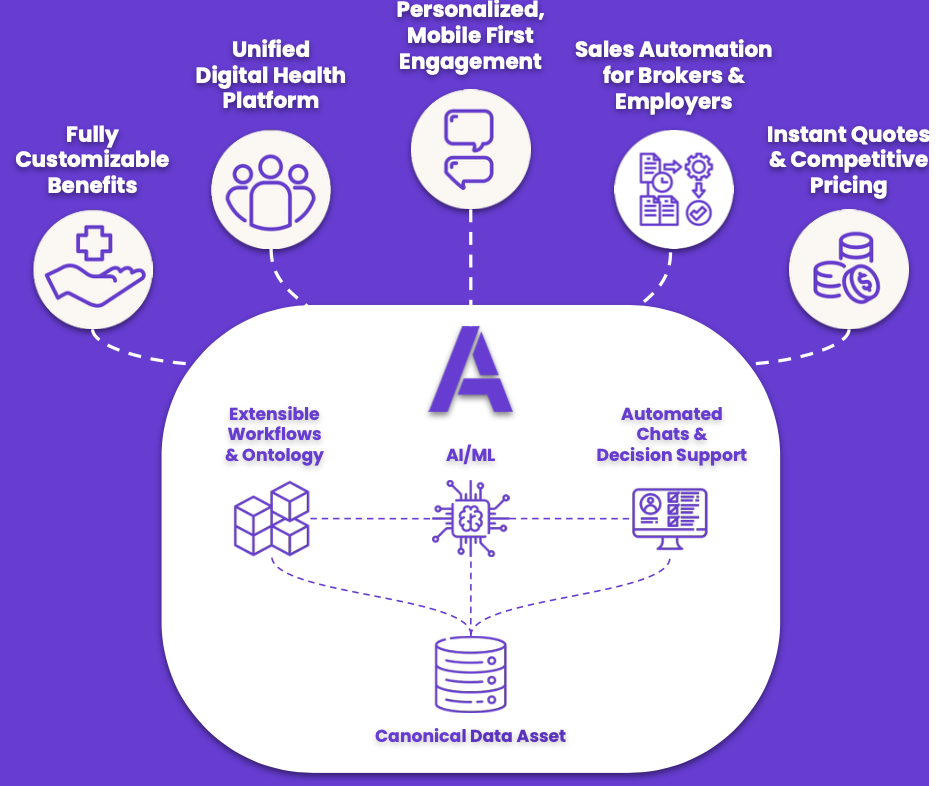
Angle Health is deliberately rewriting that script. The company has taken a digital-first approach to everything from quoting to onboarding to member engagement, reflecting themes repeated throughout their public work: modern benefits must be fast, intuitive, and designed around the way people actually interact with healthcare today. Their platform can issue quotes in minutes, provide instant ID cards, and connect members to care navigation 24/7 through mobile chat—all capabilities that legacy carriers struggle to replicate.
As Atul Kamra, Managing Partner at SixThirty, summarizes:
“SMBs have long been stuck with systems never built for them. Angle Health is rewriting those systems—making care, benefits, and admin work for employers, brokers, and employees alike. This is what modern benefits should look like.”
Rebuilding the Insurance Stack With Technology at the Core
Where many new entrants act as administrators, Angle made the harder, strategically superior choice to become a full-stack, licensed carrier. That means they control underwriting, plan design, claims operations, and member experience end-to-end — a level of vertical integration that allows them to innovate quickly and operate at a higher standard.
Central to this is Homebase, their unified operating system that connects sales, implementation, claims management, and clinical workflows on one canonical data model. This gives Angle both the precision and speed to quote more accurately, automate administrative work, and deliver a consistent member experience across every channel — reflecting themes in their blog about using infrastructure and automation to reduce friction for employers and employees alike.

This engineering-first foundation is why larger provider networks, telehealth capabilities, behavioral health solutions, and care navigation services can be offered seamlessly through one experience. And it’s why SMBs, for the first time, can access plans tailored to their true risk rather than broad community-rated averages.
As Andrew Wegryzn, Principal at SixThirty, puts it:
“Angle’s infrastructure is what sets them apart. By unifying underwriting, operations, and member experience on a single platform, they deliver transparency, speed, and control the SMB market has never had before.”
A Modern Benefits Model Meeting a Modern Workforce
Angle spotlights a structural shift happening in employer-sponsored benefits: companies now see benefits as both a recruiting tool and a retention driver, and employees expect health plans that are transparent, flexible, and easy to use. Angle’s digital-first model fits squarely into this new landscape.
The company’s approach, backed by full-stack underwriting, gives SMBs predictable economics and the potential for meaningful savings over time. Instant quoting and simplified onboarding reduce friction for brokers and employers. And national provider coverage—including telehealth and behavioral health—brings enterprise-grade benefits to organizations with 5, 25, or 100 employees.
Early traction underscores the demand: strong revenue growth, rapid market expansion, and tens of thousands of members gaining access to a more modern benefits experience.
Angle is not just improving how benefits are administered; they are redefining how accessible and usable they can be for the businesses that need them most.
Our View
Angle Health sits at the intersection of health and wealth — a space where modern infrastructure, intelligent operations, and member-centered design are rewriting long-standing industry constraints. Their combination of regulatory positioning, technical sophistication, and SMB-centric execution makes them a category-defining company.
That’s why we invested.
