
By Doug Wilber
The future of financial services won’t be built by technology alone. It’ll be built by institutions and founders willing to earn trust together.
That conviction shaped the room we brought together in New York, where leaders from Edward Jones, Franklin Templeton, HSBC, Broadridge, Fireblocks, DTCC, and a curated group of founders came together to explore tokenization, stablecoins, and the modern movement of money.
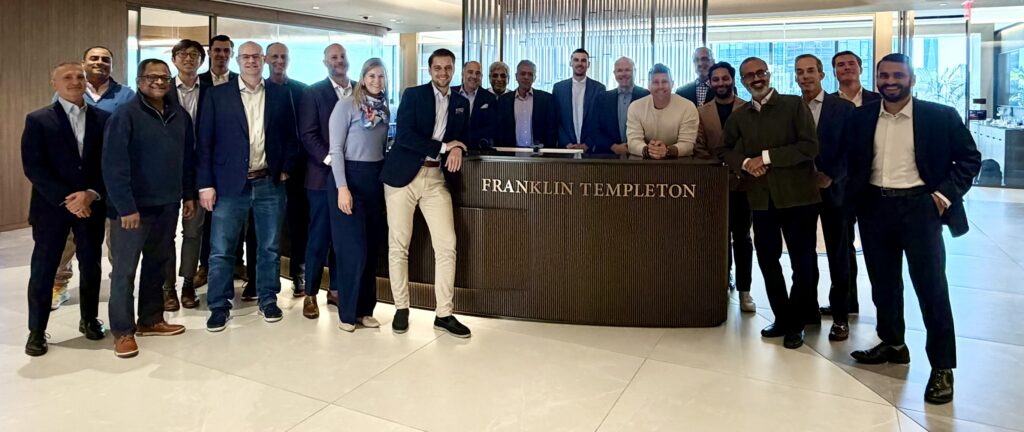
Financial services is complex by design. It protects clients, safeguards assets, manages risk, satisfies regulators, and keeps markets functioning. But that complexity also creates friction. Innovation has to move through client experience, advisor workflows, compliance, operations, custody, settlement, product, data, and distribution. No single company can solve that alone, which is why the people who understand the system and the people rebuilding parts of it need to learn together.
Here are five lessons we took from the room.
1. Tokenization only matters if it improves the client experience
The strongest conversations didn’t start with blockchains or protocols. They started with the client. Can money move faster? Can ownership become more transparent? Can private markets become easier to access? Can advisors deliver more personalized solutions?
That’s where tokenization matters: not as technology for technology’s sake, but as a way to make financial services more useful. End investors don’t care how the infrastructure works. They care whether advice is accessible, money moves when it should, products are easier to understand, returns may improve, and the experience feels trustworthy.
The better question may not be, “How do we explain tokenization to the end client?” It may be, “What outcome can tokenization deliver that the client already wants?”
2. The real unlock may be operational
Tokenization isn’t only about what clients can access. It’s also about how large financial institutions run. For firms like Edward Jones, the opportunity is to make the operating model more efficient so advisors can serve more clients profitably.
Today, transactions, contracts, ownership records, compliance requirements, and servicing instructions live in different places. That separation once made sense. It helped safeguard assets, control access, and ensure consistency. But it also creates reconciliation costs, manual workflows, operational risk, delays, and complexity. One comment in the room cut to the heart of it: reconciliation may be one of the largest costs in financial services that doesn’t always show up cleanly on the P&L.
So what happens when the contract can be embedded into the transaction itself? If ownership, rules, permissions, compliance checks, and settlement instructions can move together, firms may be able to compress parts of the operating stack. Better infrastructure becomes a lever for capacity, speed, and scale.
Democratizing financial access won’t happen through aspiration alone. It’ll happen when the economics of serving more clients improve.
3. Trust is the real adoption layer
Financial innovation doesn’t move at the speed of technology. It moves at the speed of trust. Every new product, rail, workflow, and interface has to earn its way into systems built around compliance, security, reliability, and client confidence.
Franklin Templeton shows how this shift is already moving from thesis to market. Tokenized funds and blockchain-enabled asset management are no longer theoretical. They’re part of how major institutions are testing and building the next generation of financial products.
But trust has to extend across the full chain: clients, advisors, operations teams, compliance teams, regulators, distributors, and allocators. One of the most important comments in the room was that the supply side of tokenization may be ahead of adoption. There is no shortage of assets that could be tokenized. The harder question is who distributes them, who allocates to them, who explains them, who manages the risk, and who makes the experience simple enough to scale.
4. The wallet may become the new “life interface”
One comment from the room captured the stakes clearly: whoever owns the digital wallet owns the client. That doesn’t mean every institution needs to become a wallet company. It means the wallet question is bigger than payments or custody.
Risk is shifting to the end consumer. People are being asked to manage more of their own retirement, health care, insurance decisions, property exposure, spending, rewards, identity, and investment risk. Yet the tools to manage those decisions still live in separate systems.
In a tokenized world, a wallet could become more than a place to hold assets. It could become the place where identity, permissions, advice, insurance coverage, benefits, payments, property records, rewards, documents, and transaction history come together.
Could our money, our risk, and our life eventually live in one place? And if so, who earns the right to see the full picture, connect the decisions, and deliver the next best action?
5. Institutions and founders need each other
The companies in the room showed the breadth of the opportunity.
Ondo Finance is bringing institutional-grade Treasuries and fixed income on-chain.
Eaglebrook is helping wealth managers offer digital asset exposure through advisor-ready infrastructure.
Mosaic AI is applying tokenization and AI to real estate investments and lifecycle management.
Tokenbridge is building a distribution layer for tokenized assets across wealth management workflows.
Membrane is building collateral, lending, settlement, and treasury infrastructure for digital asset markets.
Launchnodes is helping institutions run blockchain infrastructure directly and securely.
Particula, a SixThirty portfolio company, is building the risk and ratings layer institutions need to evaluate tokenized assets with confidence.
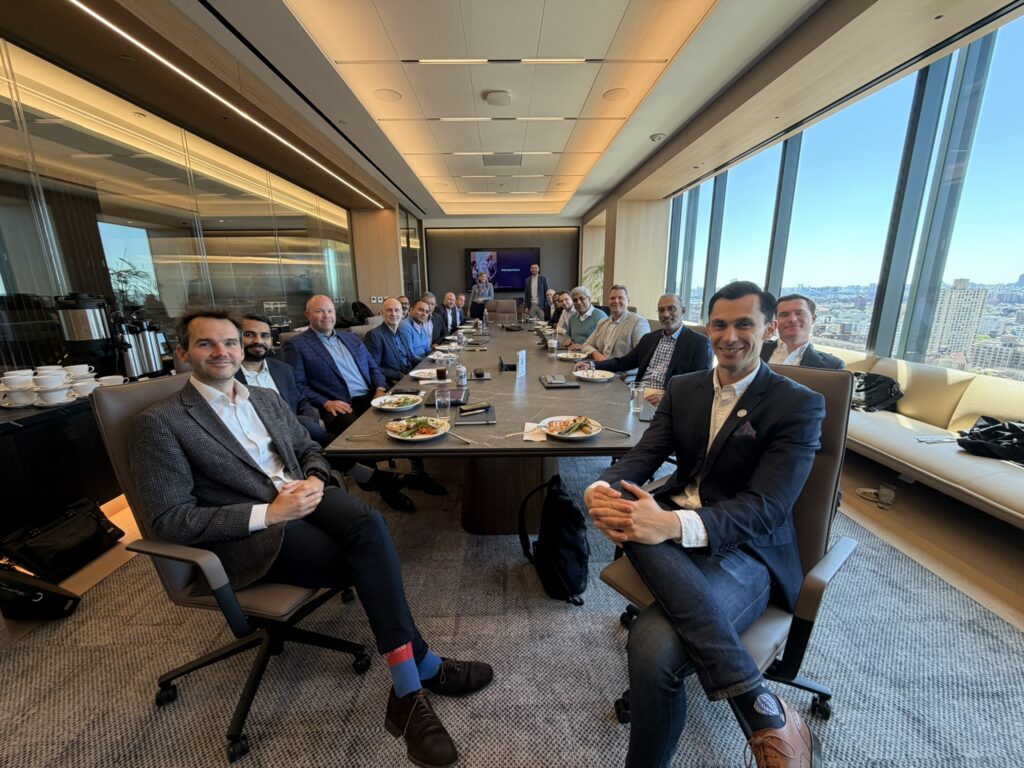
Different companies. Different layers. Same signal: the next era of financial services will require new infrastructure for access, distribution, compliance, risk, settlement, client experience, and operating efficiency.
Traditional finance brings trust, distribution, regulatory knowledge, operating context, and deep understanding of client needs. DeFi and emerging infrastructure bring speed, programmability, transparency, and new design patterns. The opportunity is not to declare one side the winner. It is to ask where each side makes the other stronger.
For institutions, the questions are practical: What does the client need? What has to change behind the scenes to deliver it? How can it be done at a cost that makes sense? What can founders build that institutions can trust, integrate, and scale?
From Conversation to Adoption
At SixThirty, we partner with founders building the connective tissue of programmable financial services: safe and compliant tokenized asset infrastructure, distribution layers for advisor and institutional workflows, risk and monitoring systems, cash and collateral tools for a 24/7 market, and platforms that make private markets more accessible and efficient.
But the filter isn’t “does this use blockchain?” It’s more fundamental: does it solve a real client problem? Does it improve how institutions operate? Does it reduce friction and cost without adding unacceptable risk? Does it help advisors serve more clients profitably? Does it help people manage their money, risk, and life in a more connected way?
We’re grateful to the leaders and founders who joined us in New York with openness, urgency, and a willingness to think together. In a market this complex, collaboration isn’t a nice-to-have. It’s how innovation earns the right to scale.
When the right people come together with the right intent, the questions get sharper, the trust gets stronger, and the path from emerging technology to meaningful innovation gets clearer. That’s why SixThirty convenes.
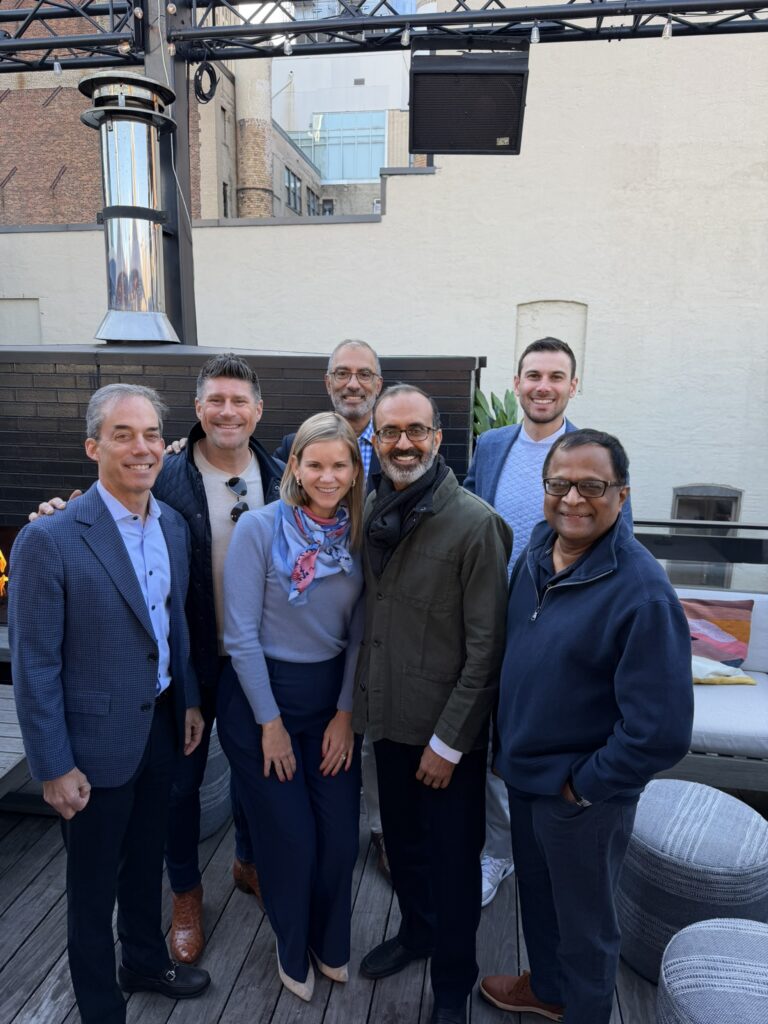
Doug Wilber is an Operating Partner at SixThirty, where he helps portfolio companies refine go-to-market strategy, build enterprise partnerships, and accelerate growth. A startup operator and financial services veteran, Doug also drives SixThirty’s engagement with LPs and the broader financial services ecosystem, fostering collaboration between founders, incumbents, and industry leaders.
