
Evan’s Conversation, Our Conviction, and the Corporate Edge
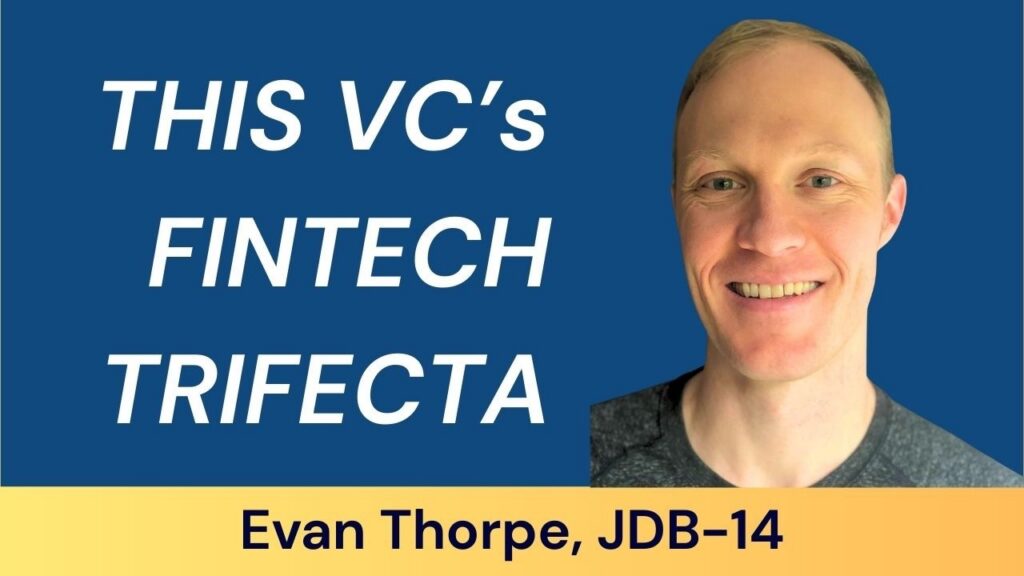
Evan Thorpe joined the JDB Report podcast and walked through the SixThirty investment thesis, why its different, and why, based on trends we’re tracking, it matters now more than ever for incumbent financial institutions.
The conversation didn’t just summarize our approach. It reinforced why our thesis has held up, why it’s even more relevant now than ever, and why our LPs view SixThirty as more than a fund.
Here are the takeaways…
A thesis built for where the world is heading, not where org charts are today
Most innovation conversations inside large financial institutions start in categories. Banking. Insurance. Wealth. Compliance. Security. Benefits.
But the biggest opportunities and the biggest risks are no longer contained inside those boxes. They show up in between them.
That’s the core of what Evan shared, and it’s why our thesis is intentionally built around an intersection that many incumbents still treat as separate worlds:
Health. Wealth. Privacy.
It sounds simple. It’s novel because it forces a different way of seeing the market.
Health is not a benefits discussion anymore. It is one of the most powerful drivers of household financial outcomes, employer decision-making, retention, and risk.
Wealth is not just “assets under management.” It is housing, private markets exposure, liquidity constraints, and the operational systems behind increasingly complex portfolios.
Privacy is no longer a checkbox. In an AI-first environment, privacy and security determine what is adoptable. They determine what is scalable. They determine what is trusted.
When those three forces collide, you get the kinds of problems incumbents cannot solve in a single business unit. You get the kind of founder-led innovation that becomes infrastructure.
That is where we invest. And where we’re winning.
Why incumbents should pay attention
The most important part of Evan’s conversation was not only “here are the themes.” It was the implication for incumbents.
Incumbents do not struggle because they lack ambition. They struggle because intersection problems are coordination problems.
When an opportunity touches underwriting, distribution, compliance, data governance, and security, it slows down. It becomes multi-stakeholder. It becomes hard to sponsor. It becomes easier to defer than to execute.
And that’s exactly why the intersection of health, wealth, and privacy matters so much. It creates the highest urgency and the highest organizational friction at the same time.
Founders can move through that friction. Institutions typically can’t, unless they have a repeatable way to engage early, validate fast, and de-risk adoption.
That’s where SixThirty comes in.
Why SixThirty is a strategic partner for LPs, not just a capital vehicle
Our LPs don’t partner with us because they want more demos. They partner with us because they want an edge in three specific areas:
Earlier signal
Seeing what’s coming before it becomes consensus. Not just “fintech trends,” but which approaches are actually working, where the wedge is, and what is becoming unavoidable in the market.
Faster validation
Separating “cool tech” from “adoptable solution.” Our platform is designed to pressure-test companies against real institutional constraints: procurement, integration, compliance, security, ROI, and operational reality.
Lower-risk pathways to adoption
A corporate venture strategy only works if it helps the institution move. SixThirty is built to connect founders with the right operating context and connect institutions with the right founders early enough that partnerships and pilots don’t feel like science projects.
This is also why we’ve invested in the community around the work. Our venture partners and the broader SixThirty network exist to bring operating depth into the ecosystem, so founders build what institutions can actually adopt, and LPs get more than financial exposure. They get strategic leverage.
The punchline Evan made clear
The intersection of health, wealth, and privacy is not a niche. It’s the next major terrain of financial services innovation.
It’s where budgets are moving.
It’s where risk is changing.
It’s where trust will be won or lost.
It’s where incumbents will feel both disruption and opportunity first.
Evan’s conversation didn’t introduce a new thesis. It validated why ours is built for this moment.
If you’re an incumbent trying to navigate AI-era trust, affordability pressure, and cross-category change, you don’t need another report. You need a partner that helps you see earlier and move faster with lower risk.
That’s what SixThirty is designed to be.
